Radio-Dreaming into the Electromagnetic Commons

What happens when we treat radio not as a technology to command, but as a living field that gathers us into relation? We consider radio primarily as a cosmic force, moving through bodies, landscapes, and infrastructures. While states divide the radio spectrum into neat parcels of ownership and control, radio itself remains radically ungovernable: it leaks across borders, diffracts off the ionosphere, and echoes with the Big Bang.

Through our collaborative practice of building improvised radio receivers from scrap materials, we listen collectively to a fusion of natural emissions and human transmissions. These open, untuned devices invite a mode of attention rooted in uncertainty and curiosity, revealing layers where local broadcasts, cosmic hiss, and electrical disturbances coexist. In these gatherings, radio becomes not a tool to be mastered but a companion in shared experimentation, learning, and attunement.

Drawing from Ursula K. Le Guin’s The Carrier Bag Theory of Fiction (1988), we imagine a ‘Carrier Bag Theory of Radio’: in which receptacles for radio (receiving devices that allow us to listen) are valued over the ‘long, hard objects’ (Le Guin, 2024, p.28) of transmitting antennas. We understand reception as a continuum that vastly and importantly predates modern technological transmission, and we see the radio spectrum as a collective vessel of forces rather than a territory to be claimed. We align this thinking with calls from artists Celeste Oram (2024) and Soph Dyer (2017) for an electromagnetic commons, reminding us that radio governance is always cultural, political, and, for us, embodied.

This text offers a poetic reorientation toward listening and dreaming -together, openly, and within the ever-shifting electromagnetic field that surrounds us.
Orientation

Electricity and magnetism weave and shift around us, through us and with us, during every moment of every day. Electromagnetism is a hybrid energetic relationship that allows humans to send and receive information wirelessly, such as sound (i.e. terrestrial radio), image (i.e. TV and satellite), or data (i.e. Wi-Fi), both locally and globally. When we send information, we are attaching it to a set of radio waves on a chosen frequency, using electromagnetic energy to carry our signals imperceptibly through the air.

These useful waves have been partitioned into ‘bands’ of frequencies by international coordination and national regulations. Bands are allocated for different purposes, such as broadcasting, aviation, mobile networks, satellites, and amateur communications. Though electromagnetic waves are infinite, the range of their frequencies is finite, making the spectrum a valuable - and political - resource. Corporations that rely on radio waves for their technological products (mobile networks, satellite firms, etc.) lobby governments to prioritise their use. As such, control over frequency allocation is a technical, cultural, and a political issue. However, electromagnetism is a natural phenomenon that existed long before human activity and will exist long after.

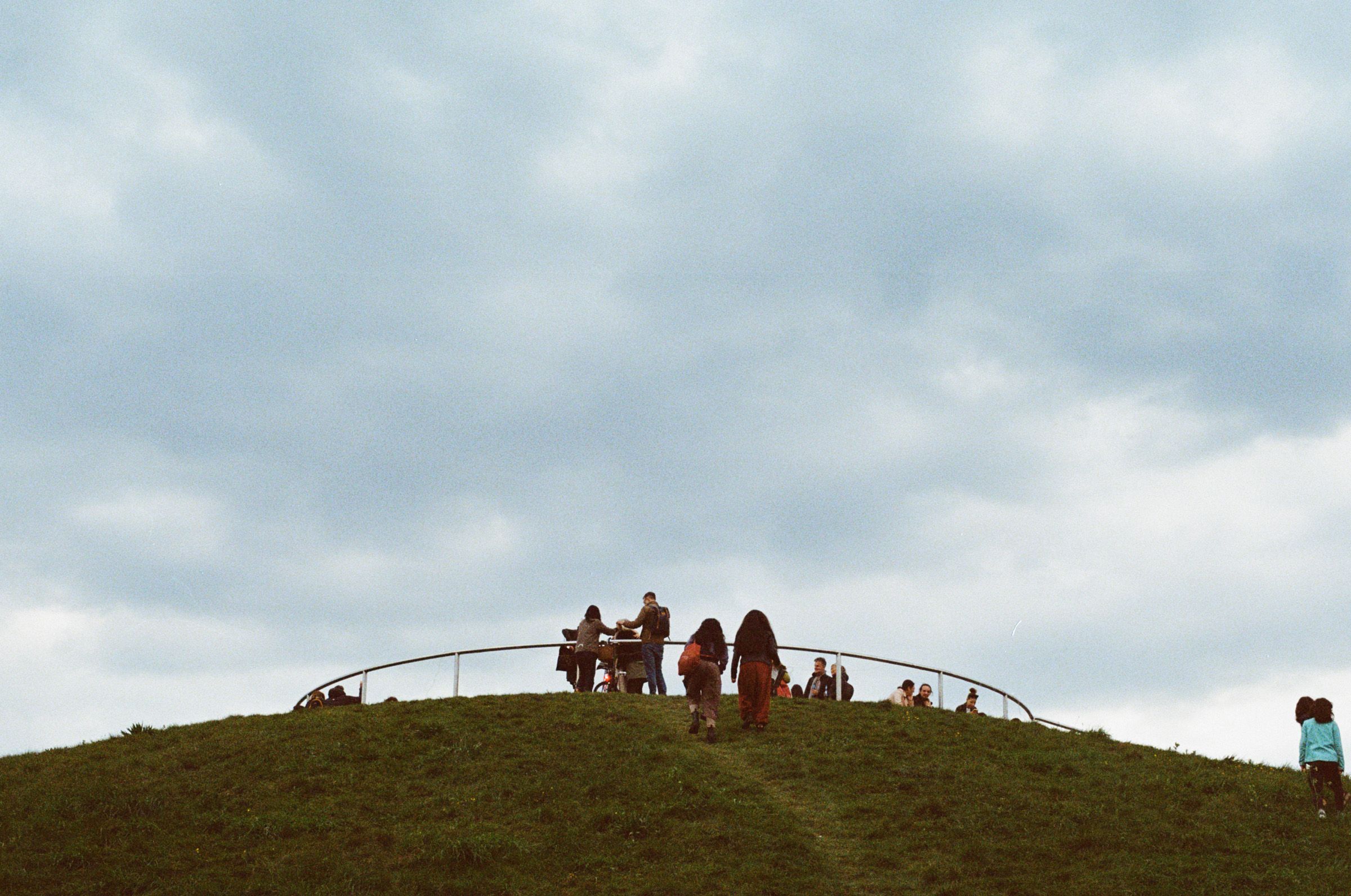
Our collective engages with radio waves, one section of the vast electromagnetic spectrum, as a compelling artistic material, both poetic and political. It is an invisible, shapeshifting, and enigmatic phenomenon that has long-whispered to us in dreams, danced the aurora on dark horizons before our eyes, and makes the hairs on our neck stand with unseen sensory information that, among other things, can foretell the arrival of storms. One of our primary activities since we began working together in 2020 is the construction of homemade devices sensitive to radio waves. We make what we call Open Wave-Receivers (Shortwave Collective, 2021), which listen for a broad range of frequencies and translate them into sound. We forage for pieces of metal and minerals in our local environments and test their properties within the radio circuits, congregating with other radio-makers on top of hills, climbing trees and stairs in tower blocks to try and lasso a signal; to produce a snapshot of radio waves as determined by the atmospheric and geographic conditions of that moment. It’s important to our collective practice that others are brought into this exploration of radio, and we find that this growing network of makers, many of whom would never have considered themselves radio-builders, allows us to create new knowledge and perspectives together.

Fig. 1 Ivo Blackwood, Climbing the Mount at Dusk, 2022.

Fig. 1 Ivo Blackwood, Climbing the Mount at Dusk, 2022.

In this collectively authored piece, through our assemblage of voices, we question how the radio spectrum is governed in a hyper-capitalist society, divided without community consensus into territory and terminable technology. We stand with those communities who argue that radio waves, as a natural resource, are a global commons and dream about access that is transparent and equitable. Learning from the proposals for ‘electromagnetic commons’ by Sophie Dyer (2017) as well as the advocacy of artist and researcher Celeste Oram (2024), our project aims to spark collective conversations on this topic and imagine how this spectrum could be thought of differently. We share the idea of a ‘Carrier Bag Theory of Radio’ that prioritises listening and receiving over transmission, and propose ‘radio-dreaming’ as a space for sensitivity to electromagnetic possibilities beyond our senses, from the stirrings of the hairs on our neck, to the prospect of interplanetary transmissions from Earth to other, and… all the things we don’t know.

Territory

Radio, electromagnetic ether, circulates, traverses, crosses boundaries. It's a wave that can be ridden by information intended for delivery. It’s an invisible territory. Walls can only be built around radio frequencies with energy, with electrical power. The licenses that government bodies bestow around the world are theoretical. How are these information highways policed?

Even though radio can be thought of as a territory - often visualised in a cartographical form - much of the human use of radio has been for listening to sound (and sound seems a more apt way of metaphorically conceptualising radio). Sound bleeds and is transformed through materials, stirs movement through vibrations, and emphasises and distorts through its harmonics as they fill and react to space. Here is a territory that reacts, bleeds, echoes, and amplifies. Here is a territory that can be temporarily engraved with information... or maybe eternally so, if those signals happen to escape the atmosphere, and continue on into space.1

Space is full of its own radio emissions. Electrons spiralling around magnetic fields in the Milky Way create 'galactic background noise'; remnant radiation from the Big Bang fills space with uniform microwaves; the sun emits bursts of radio waves during solar flares and storms; and Jupiter has its own 'radio voice' according to astronomers. Between 2012 and 2017, NASA's Van Allen Probes made recordings of 'space songs' publically available -a chirping and whistling chorus of very low frequency radio waves transduced into sound. Amateurs heard these sounds too, pointing DIY radio receivers at the sky during the solar maximum of 1989 and onwards.

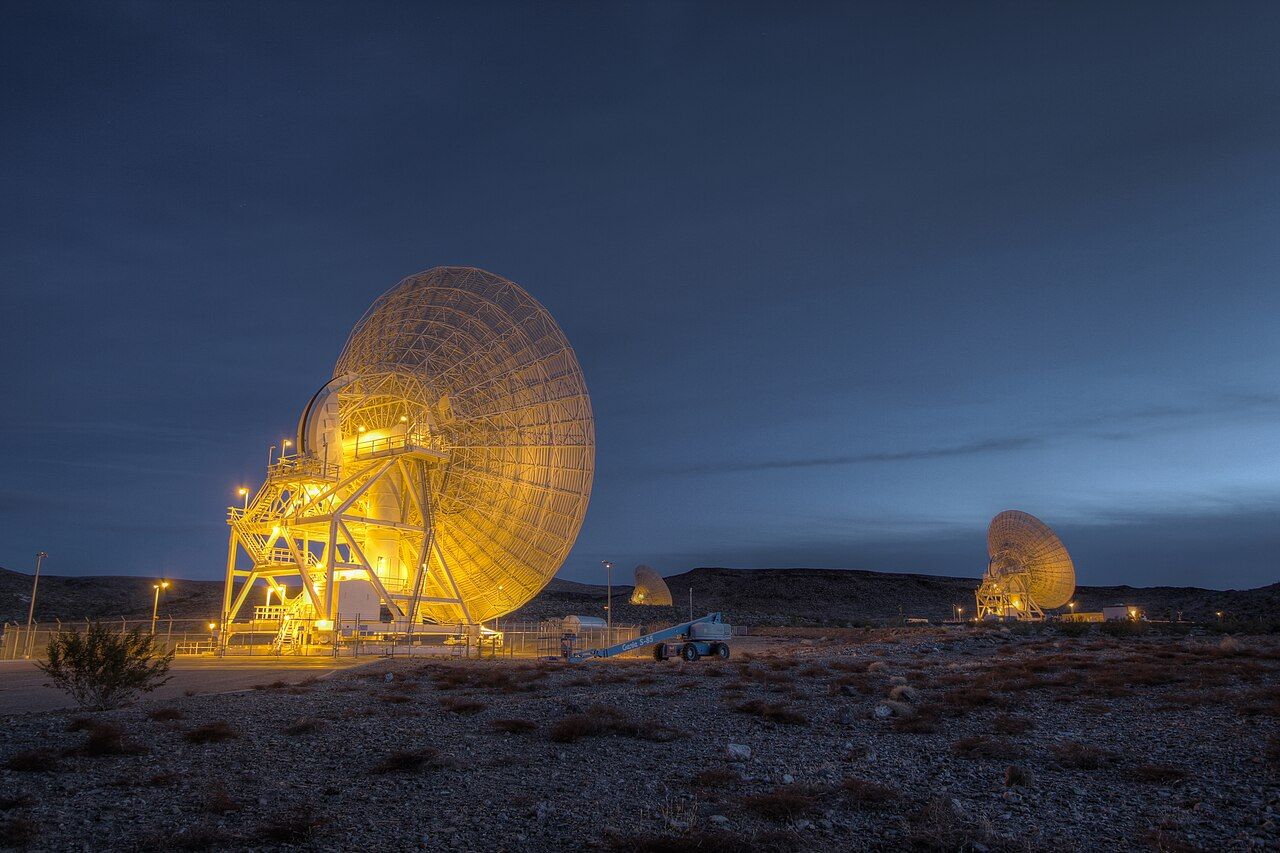
Alongside these natural phenomena and terrestrial radio bleeds, powerful nation states own radio networks designed specifically for space. The largest, NASA's Deep Space Network (DSN), communicates with spacecraft up to 20 billion kilometers away. Tracking complexes house their giant antennas, positioned at 120 degree intervals around the planet (at the outskirts of Madrid, California, and Canberra), to maintain contact as the planet rotates, since radio waves can only travel in straight lines.

Radio transmissions in deep space are just as regulated as those on Earth. The International Telecommunication Union (ITU), a United Nations agency, allocates frequency bands for all radio communications. Deep space transmissions are sent on the X-band and received on the Ka-band, with 70-meter dishes digging through cosmic radio noise to detect signals as weak as those produced by a small phone charger. Both nation states and private companies (e.g., SpaceX) can access these channels under agreements or contracts. Should we gain access to other planets, it is radio technology that will be used for communication both with exploring astronauts and for transmitting to other lifeforms. Terrestrial radio may, again, reach the extra-terrestrial. In this way, radio has long been an integral part of our interplanetary dreaming of communicating with worlds beyond ours.

Fig. 2 NASA, Dawn in the Apollo Valley, 2012.

Fig. 2 NASA, Dawn in the Apollo Valley, 2012.

If radio operates in the background - either as a means towards other ends, or as cosmic radiation filling the universe, who or what is in the foreground? When space is an extended field-of-play for humans, we challenge Earth-centric attitudes where we can endlessly litter space with our radio transmissions. Perhaps our martian counterparts are just beginning to receive our radio transmissions, after they have travelled through the ether for a hundred years to finally reach a lifeform sensitive to it, they are now receiving a hundred years of human transmissions, getting slowly bombarded into a climax, where every milliHertz of frequency is brimming with transmissions at all times…

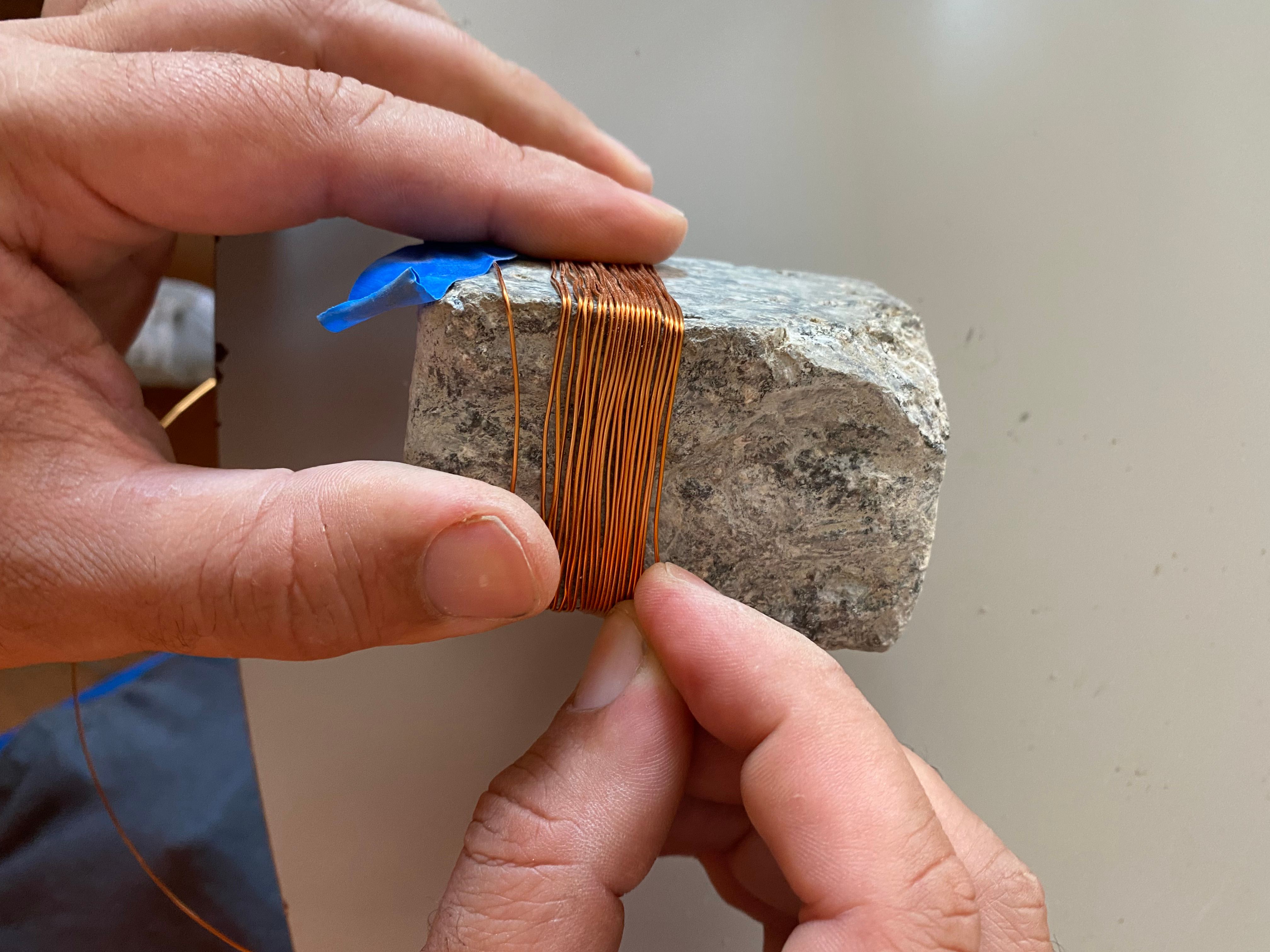
Fig. 3 Shortwave Collective, Buinho Rock Coil, 2021.

DIY alternatives

In opposition to the clean, strong, regulated signal sent by government and commercial entities, sits the vaporous, cosmic haze of electromagnetism, two sides of the same coin. Against the privileged, exclusive, and operational need to listen, lies the poetic mystery, curiosity, and the equal right to listen together. Opposite the sophisticated tracking complexes and the advanced technical installations, pose the homemade receiver designs made out of everyday materials and recycled debris. The calculated, ominous ‘Space Songs’ on the one side co-exist with the open, fun, and collaborative listening happenstances of the other side.

The precise listening of a scientific reception becomes ambiguous when met with the turbulent porousities/porous-sites of the Open Wave-Receiver. The cartographic accuracy becomes unrelated to the phantasmic embodiment of an openly-received signal. An act of unknowing and figuring out is taking place. Any effort to distinguish and compartmentalise is futile. And yet, an understanding and a connection is shaped through making, trying, failing, and trying again. An alternative and empowering kind of engineering is being developed, a co-learning through making and innovating.

The gated electromagnetic bureaucracies sit against a kind of commons where knowledge is open, customisable, in perpetuity, and growing from within the different communities of everyday people who tap into the world of DIY reception through participating in our workshops driven by playfulness, exploration, creativity, communication, and co-creation. Our praxis is ephemeral, plural, and fragile.

Against the backdrop of the capitalistic takeover of the perfectly free, natural, and ancient resource of the radio spectrum, it’s strangely easy to build a radio. To put some copper into something resembling a particular circuit formation (this part seems to be oddly and remarkably changeable), convert the mute radio waves into sound waves we can hear, and listen in on a speaker or some headphones. You might hear a local AM station, news in a language you don’t understand, the mwehp-mwehp-mwehp of someone getting a text message, sport, textures of static, or sferics: bursts of energy from near or faraway lightning. The radios we build together are un-tuned, so we can hear all of the above in one go, or more, or less. It is beautiful, multi-layered, changeable, minutely local but intricately connected to the global, sometimes confusing, and very, very DIY. Uncontrollable. Yet the more we learn about radio, the more complicated and entangled it becomes.

Simply spiraling copper creates a receptive magnetic field. Spacing these thin strands of metal ever so slightly apart, the copper can form the seething, free wheeling, vibrating, non-aligning electrons into vibrating waves. The diameter and length of the spiral create a kind of buoyancy. Which frequency will it float or sink? Sounds delve under the background radiation, then emerge from it. Certain coil lengths and widths welcome more uncertainty… They catch on the slope, the runoff where one frequency bleeds into another, intended for delivery.

Carrier Bags

What we have come to label as 'radio' exists as both a noun and a verb. It refers to the device you can listen to (a receiver), the category of content you are listening to, and a method of communication, i.e. information can be 'radioed' somewhere. Although, before we were able to load up radio waves with our information, it still existed in its own immaterial and natural form before human technology. Since human technology, radio has also almost become a place, an invisible territory as well as a material commodity. So it is both a thing, a non-thing, a method, a mode, a commodity, and a place all at the same time.

In anthropologist Elizabeth Fisher’s book Woman's Creation: Sexual Evolution and the Shaping of Society the chapter ‘Carrier Bag Theory of Evolution’ (1975), argues that carrier bags, nets and baskets predated spears and clubs, offering a cultural evolutionary perspective of collection and reception over forceful and propelling action. Fisher’s theory brings to mind that radio, in its radical state and essence, is the movement of two energetic forces (electricity and magnetism), and was received long before it was transmitted by humans. In its primal reception, it has interacted with our whole planet and beyond, in ways that are most often beyond our senses, and our total environment has been its container. The electromagnetic force of lightning and other forms of natural radio initiate powerful surges into soil which activate mycelial networks, boosting nitrogen fixation and resulting in greater yields of mushrooms. Thunderstorms and lightning also form the Earth's global electric circuit, while lightning both acts to form the ozone layer and produces chemicals that clean it.

In her essay The Carrier Bag Theory of Fiction (1988), inspired by Fisher’s theory, author Ursula K. Le Guin posits that the evolution of our collective cultural narrative inaccurately upholds and prioritises bombastic heroisms of violence and weapons of domination, and poignantly suggests that these narratives were in fact preceded by humble, quieter stories of survival rooted in the undramatic and unmemorable acts of collecting oats and seeds. We would like to extend their theories of carriers and containers (receivers) preceding weaponry to the sphere of electromagnetism, and begin to imagine a ‘Carrier Bag Theory of Radio’. This is a theory that asks us to remember our first moments of electromagnetic reception: our bodies, our cells, our scars, our poetry, our hair, the air, the mycelia, the trees, the rivers, the stars, the planets have all been vehicles and containers for radio long before impressive antennas, breakfast talk-shows, and click-bait headlines of luxury cars non-consensually deposited into outer space relaying communication back to Earth.

Scholar Fionn Bennett writes that perhaps the ancient Greek oracles were able ‘“to tune into” circumambient electromagnetic activity’ (2019, p.229), thereby listening to the electric breath exchange between the Earth and the sky. Through meditation and diaphragmatic techniques, the oracles deliberately transformed their bodies into acoustic receivers to hear the hiss of the past and future and shared these messages with those that sought it. In more contemporary history, artist Sébastien Robert has searched archives to collect hundreds of testimonies from Arctic indigenous communities who have heard natural radio through their bodies alone, unaided by technology, listening to electromagnetic chirps and whistles coinciding with auroral displays. These accounts make a mockery of the idea of Guilliermo Marconi, first man of radio technology and its first listener, and instead open possibilities for both human and non-human entities throughout the ages finding ways to attune to these cosmic and planetary signals.

Commons

With this understanding of the vast, untamable flow of radio transmissions from cosmic rays and lightning, from millions of cell towers, from x-ray machines and microwave ovens, received every second by the Earth, the stars, and our bodies, the idea of controlling radio waves seems almost absurd. And yet, powerful institutions do devise and enforce radio regulations. The International Telecommunication Union debates, decides, and dictates who may use which waves, allocating bands to different services, while national administrations issue licenses, often to the highest bidders.

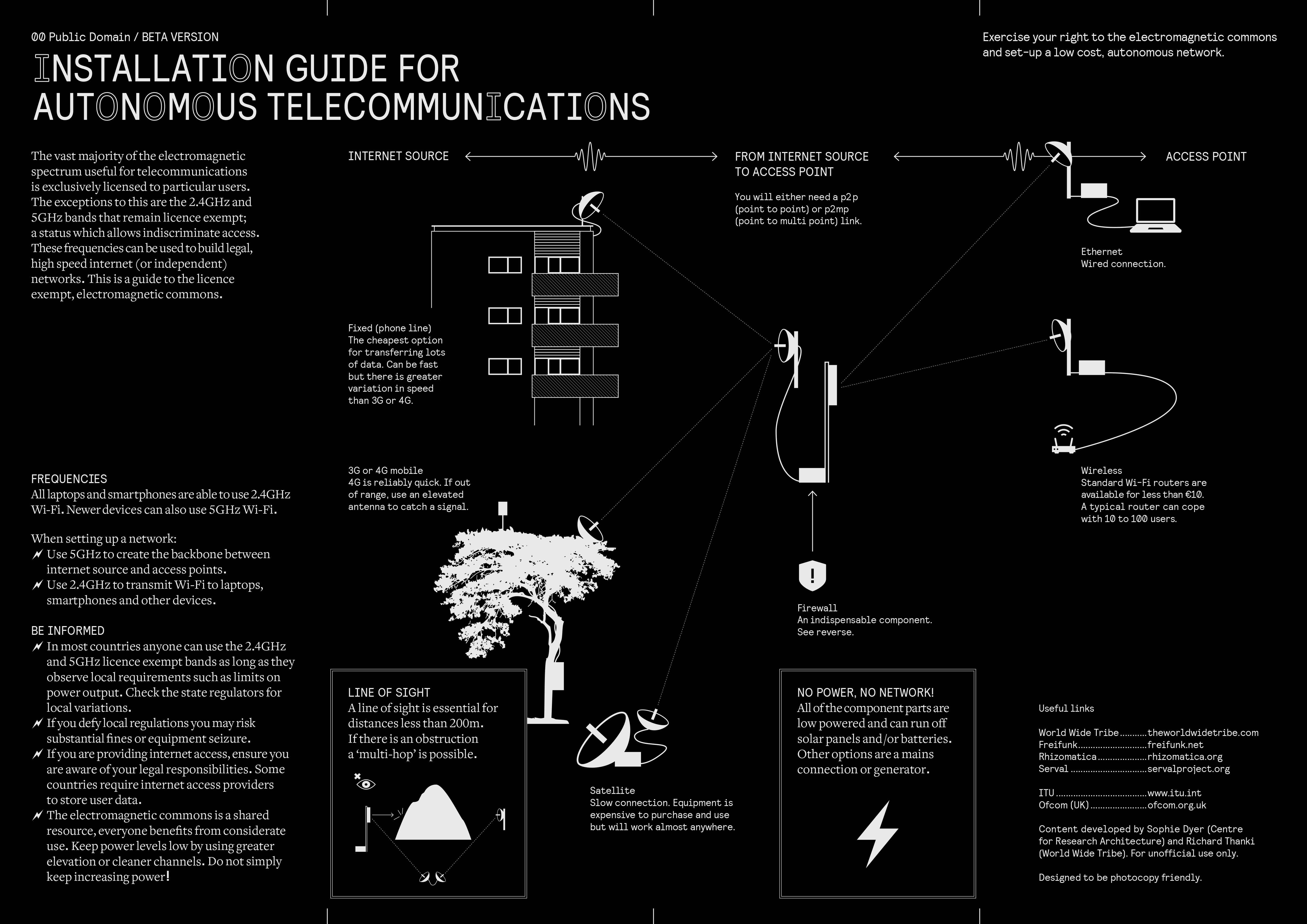
Soph Dyer, in their work on the electromagnetic commons (2017), illuminates the stark disparities embedded in these systems. Above the Calais jungle, rows of wires support networks transmitting high-speed trading data across infrared frequencies, towering over the fragile DIY networks activists set up below to provide internet access to refugees. Power here is visible in the literal height and speed of networks: ultra-fast, high-frequency infrastructure designed to generate capital soars above the low-fi networks that sustain human connection, community, and survival.

Fig. 4 Soph Dyer, Electromagnetic Commons, 2017.

Fig. 4 Soph Dyer, Electromagnetic Commons, 2017.

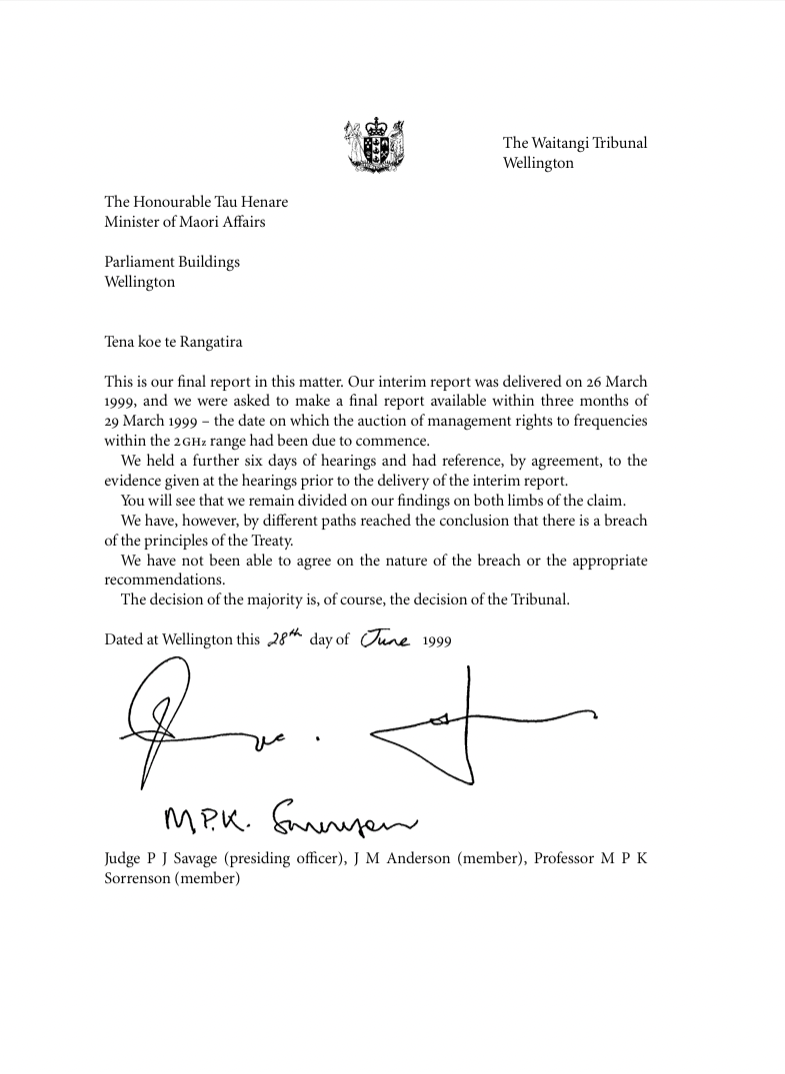
The year 2000 marked a peak in the UK’s valuation of spectrum, as mobile network companies engaged in aggressive bidding for spectrum space to deploy 3G networks (Börgers & Dustmann, 2005). Just a year earlier, Māori groups had fought and won in court for ‘fair and equitable access’ (Culcullo, 2022) to the spectrum after being excluded from decision-making processes. Their struggle pioneered the concept of spectrum sovereignty and Indigenous rights to digital infrastructure - a fight that continues to resonate for communities around the world, asserting that access to radio waves is not merely technical, but deeply political and cultural. In an excerpt from The Waitangi Tribunal Report (1999, p.41), which auctioned ‘management rights to frequencies within the 2GHz range’:

‘[The Crown did] not accept that the radio spectrum was a Maori taonga [a valued possession] in 1840 and therefore does not accept that Maori have a special right to share in the use of the spectrum… The claimants, on the other hand, say that Maori knew of the existence of the electromagnetic spectrum. Maori were aware of the existence of various natural phenomena, made good use of some of them – for instance, the use of light emitted by stars for navigation – and incorporated them into their own philosophical world view. One example of this cited by Professor Mead was Tawhaki climbing the heavens to bring to earth knowledge, education, and sacred incantations for the spiritual wellbeing of the people. Maori were therefore using radio waves for their own purposes, though they (along with all others) lacked the technology that we have today to enhance sight and sound.’

Fig. 5 Waitangi Tribunal Report, 1999.

In many parts of the world, a narrow band of radio frequencies are reserved for free and unlicensed public use. The Federal Communications Commission (FCC) in the USA established the Citizens Radio Service in 1945, so that personal or small business communications could take place locally. The most commonly allocated frequency range, around 27MHz, is also known as the 11m band - one full cycle of its wavelength stretches 11 meters, but is restricted by power, thereby amplitude and reach, though radio is ultimately transnational and often leaky. Transmissions can travel as far as open space (buildings may interfere with the signal) and the power limit allows. Relays of radio signal to extend reach, both online and physical, are forbidden.

Coincidentally, every eleven years the solar cycle distorts and emphasises the reach of this band. As we are currently experiencing the height of this cycle, little low power transmissions on 27MHz have a higher tendency to travel greater distances, bouncing off the layer of charged particles in the Earth’s upper atmosphere called the ionosphere in a phenomenon known as skywave propagation. This tendency for long distance travel makes the Citizens Band dense, not only with intentional local traffic but also contemporaneous interjections from far flung locations. An eleven-year season of communication choirs gather on the Fata Morgana of the radio horizon.

Regulators granted less interference-prone, more neighbourhood-travelling wavelengths for free citizen use in the 1990s. The Family Radio Service (FRS) (462 and 467MHz) was granted by the FCC in 1996 in the USA allowing for long distance walkie talkies, baby monitors, and cordless telephones without so many chances for accidental interjection. On these frequencies people are sending voices, morse code, data packets. In advanced receivers ‘selective calling’ can allow that only certain tones turn on a receiver. But a spoken voice on the frequency range can hit these coded tones, unintentionally opening a receiving door, a ‘talk-off’, a song that opens sesame.

In 1997 the European Radio Communications committee granted the Private Mobile Radio (PMR) frequencies 446MHz for license-free use in Europe, Singapore, and Malaysia. Yet FRS frequencies are illegal for unlicensed transmitters in Europe, and the PMR frequencies are illegal for unlicensed transmission in Australia, USA, and Canada, as the frequencies for emergency services, licensed amateur operators and military radar systems occupy the otherwise ‘free’ frequencies in the alternate territories. This lack of overlap limits possibilities for citizens to use these peak solar conditions to connect with each other globally and experiment with possibilities for free and unlicensed long-distance communications. Such national regulatory boundaries constrain what might otherwise be a truly planetary low-power communication ecology, where citizens harness solar conditions and bypass the technologies of major corporations to communicate as they choose.

Coda

To adopt a phrase from Virginia Woolf, radio transmissions “continue each other, in spite of our habit of judging them separately” (A Room of One's Own, 1929, p.148). In a similar manner, communities, bodies, elements, and actions learn from each other, communicate with each other, bounce off each other. We cannot extract the each from the other. They, and we, too, are bound to propagate together. In that sense, the conglomeration of these transmissions as a finite spectrum serving those with power, separated from the actual energies, elements, actions, and communities they stem from, is against their plurivocal nature. Hence making access accessible again, through this text, is to us not merely a compilation of words but a form of text as practice (Kristeva, 1984), a way of bringing the word to the foreground and aligning it with our ongoing practice. It is a collective effort to address the word within the context where our shared practice emerges from and to create a socially engaged, open discussion that listens beyond the self-referential, narrowly-subjective to the many layers of transmissions, all at once, not separately.

We invite readers to dream with us, to imagine a new relationship with radio that is situated and embodied, and deeply connected to past, present and future:

It is plural, polyvocal and therefore waves (many waves at once)

A disturbance, a cacophony, a hypermorphology of signals and noises

A disarrangement of orders, hierarchies, and anticipations.

We value the poetic and the plural over strong signal and the clear channel. We resist the clear channel…

-Shortwave Collective and Gutiérrez, 2025

Interrupting all programs.

This is radio clash from pirate satellite,

Orbiting your living room,

Cashing in the bill of rights…

This sound does not subscribe

To the international plan,

This is radio clash using aural ammunition… Can we get that world to listen?

-The Clash, 1981

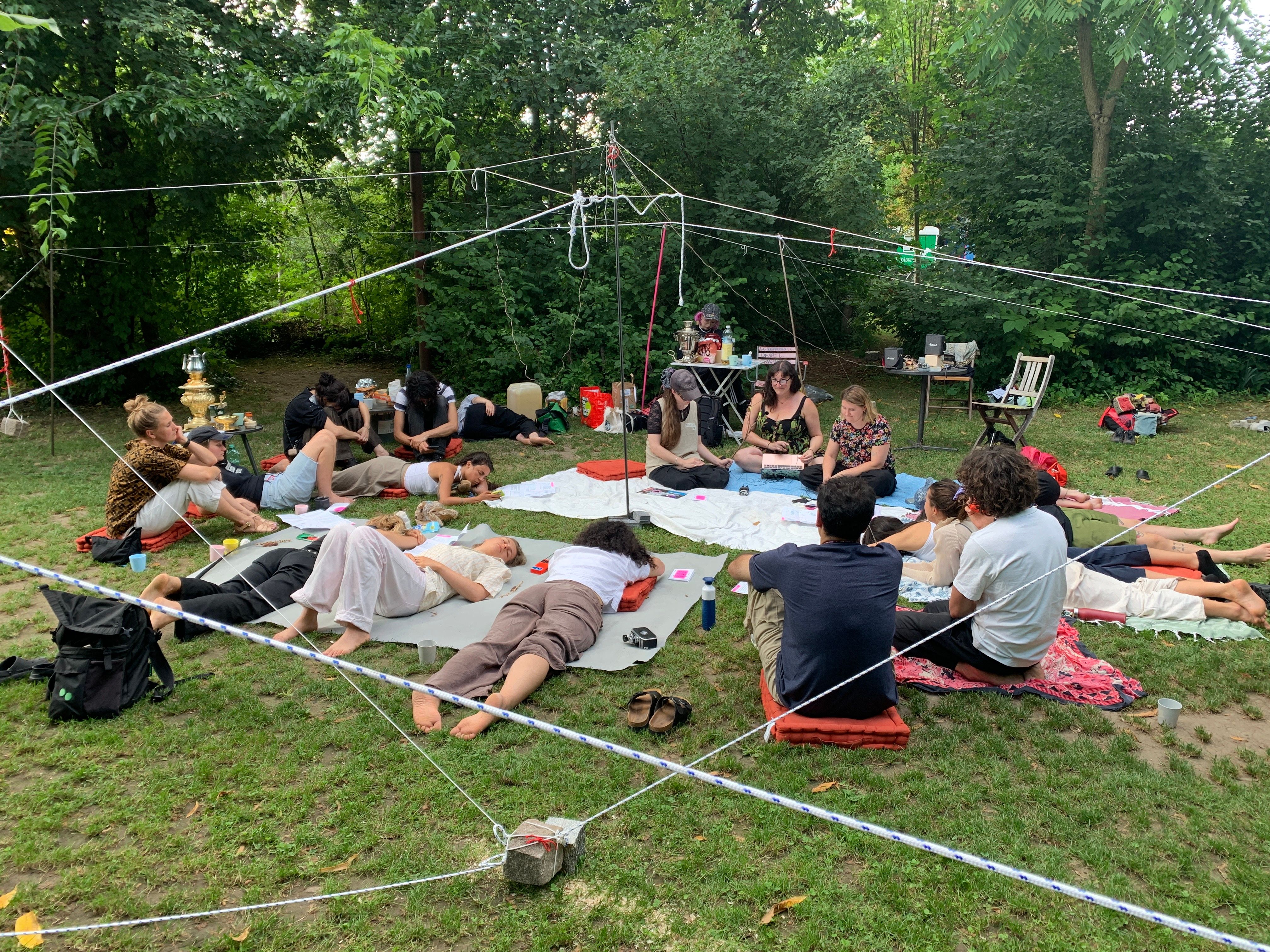
Fig. 6 Chantelle Lue, Dreaming into a Radio Wave with Shortwave Collective, Zurich, 2025.

If we imagine, for a moment, that we have become a single radio wave, then what we are in our essence, is movement. The peaks and valleys of our wave-like existence can be huge, from the size of a cat, to a wave that is larger than our planet. As we are made of electricity and magnetism, our force, strength and shape are affected by other electricity and magnets around us, magnets such as the Earth itself, as well as the sun, the moon, the weather - and other planets, galaxies and stars. Sometimes, as a radio wave, we travel on the tails of shooting stars over incredible distances. Where would we go, and who would we visit? (Shortwave Collective, 2025)

Bibliography

Bennett, F. (2019) The Psychoacoustics of Enthousiasmos: How to Hear a Cosmopoietic Cantata in a Chorus of Atmospheric Whistlers. Available at: https://www.academia.edu/37639949/The_Psychoacoustics_of_Enthousiasmos_How_to_Hear_a_Cosmopoietic_Cantata_in_a_Chorus_of_Atmospheric_Whistlers (Accessed: 1 December 2025).Börgers, T. and Dustmann, C. (2005) ‘Strange bids: bidding behaviour in the United Kingdom's third generation spectrum auction’, The Economic Journal, 115(505), pp. 551–578.

The Clash (1981) Radio Clash [song]. On 'This Is Radio Clash' / 'Radio Clash'. Columbia Records.

Culcullo, J. (2022) ‘Spectrum Unceded: How Indigenous people are fighting for digital sovereignty in a wireless world’, The Wire Report. Available at: https://www.thewirereport.ca/2022/09/30/spectrum-unceded-how-indigenous-people-are-fighting-for-digital-sovereignty-in-a-wireless-world/ (Accessed: 1 December 2025).

Fisher, E. (1975) Women’s Creation. New York: McGraw-Hill.

Kemp-Welch, H. & Sanders, O. (2025) ‘All Under One Magnetosphere’ [audio feature]. Illuminated, BBC Radio 4.

Kristeva, J. (1984) Revolution in Poetic Language. New York: Columbia University Press, p. 210.

Le Guin, U.K. (2024) The Carrier Bag Theory of Fiction. Cosmogenesis. First published in 1988 in Women of Vision. San Francisco: ICS Press, pp. 165–170.

McGreevy, S. (2015) Auroral Chorus VI: The Music of the Magnetosphere [audio]. SoundCloud. Available at: https://soundcloud.com/stephen-mcgreevy/sets/auroral-chorus-vi-the-music-of-the-magnetosphere (Accessed: 1 December 2025).

Oram, C. (2024) Citizens of Spectrum, a radioassembly & radioplay [webpage]. Available at: https://celesteoram.com/Citizens-of-Spectrum-2024-a-radioassembly-radioplay (Accessed: 1 December 2025).

Robert, S. (2025) The Lights Which Can Be Heard [artwork]. Available at: https://sebastienrobert.nl/The-Lights-Which-Can-Be-Heard (Accessed: 1 December 2025).

Shortwave Collective (2021) Open Wave-Receiver [webpage]. Available at: https://www.shortwavecollective.net/open-wave-receiver.html (Accessed: 1 December 2025).

Shortwave Collective & Gutiérrez, A. (2025) Momentum of Uncertainty [Performance]. Cafe Oto, London, UK.

Shortwave Collective (2025) Dreaming into a Radio Wave [workshop]. School of Commons, Zurich, Switzerland.

University of Iowa (2016) Van Allen Probes Waves Investigation [webpage]. Available at: https://space.physics.uiowa.edu/plasma-wave/rbsp/audio/showcase.html (Accessed: 1 December 2025).

Waitangi Tribunal (1999) The Radio Spectrum Management and Development: Final Report (WAI 776). Wellington: Waitangi Tribunal. Available at: https://forms.justice.govt.nz/search/Documents/WT/wt_DOC_68205950/Wai776%20final.pdf (Accessed: 1 December 2025).

Woolf, V. (1929) A Room of One's Own. London: Hogarth Press.

(1)

We recently discovered that transmissions on the Citizens Band (a range of frequencies varying from country to country, allowing for broadcast without a license), which are largely made up of local conversations between truck drivers or taxis, can sometimes make a much longer journey. During certain atmospheric conditions they have the potential to bypass the ionosphere which is usually their ceiling, and broadcast out into space - forever.

Shortwave Collective

Shortwave Collective is an international feminist group using the electromagetic spectrum as artistic material. Active members: Alyssa Moxley, Brigitte Hart, Georgia Leigh-Münster, Hannah Kemp-Welch, Maria Papadomanolaki.