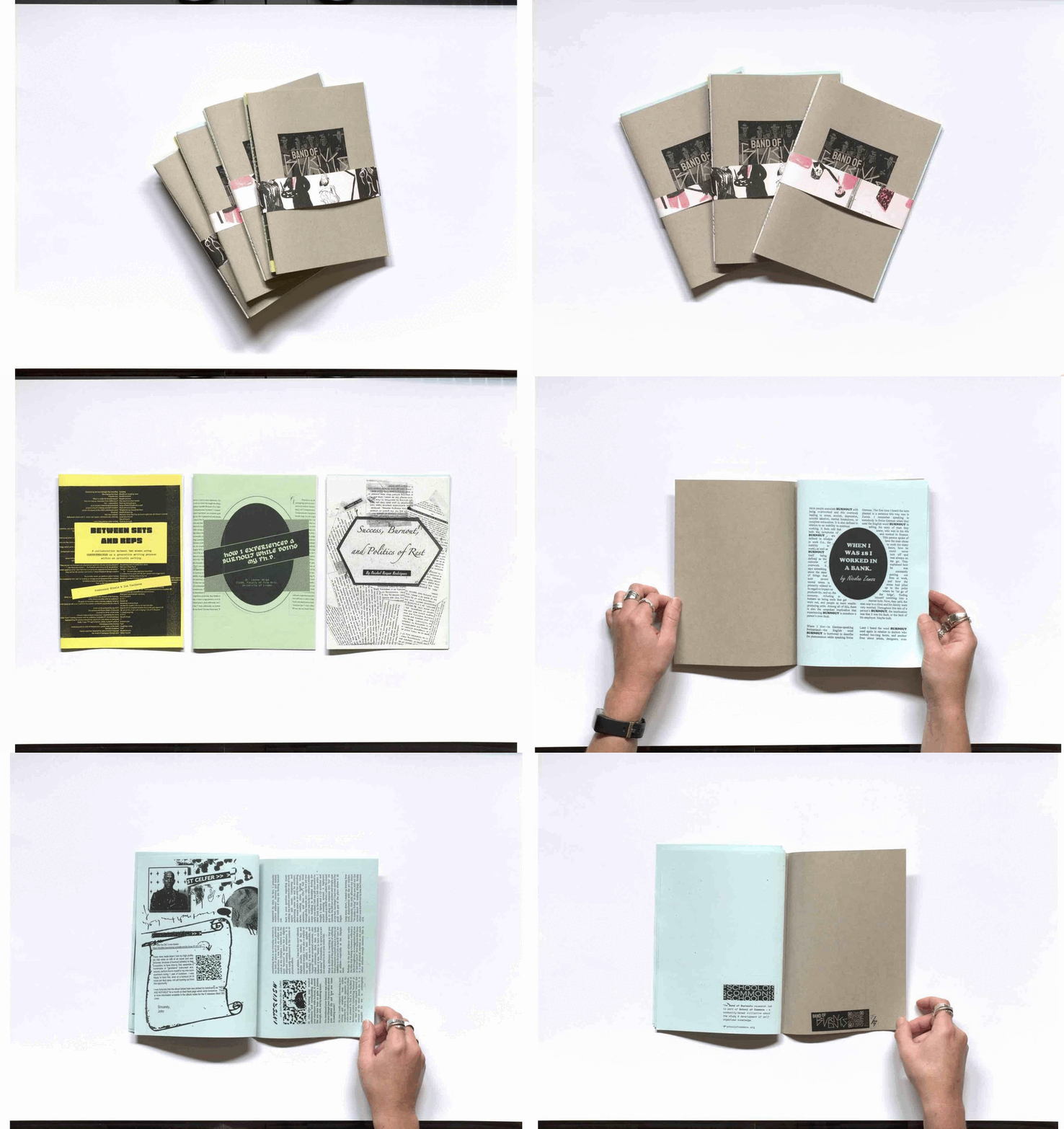
#1 Band of Burnouts At first, the method and device of anecdote may not seem at first glance ‘to belong to an academic repertoire of methods at all.’1
In the book Inventive Methods: The Happening of the Social (2012) Mike Michaels describes the method and device of the anecdote as ‘the way in which the telling of an anecdote sets up a relation to a specific context that enables anecdotilization to make a difference, and making this difference is what gives the anecdote both relevance and efficacy; it is what enables the anecdote to circulate. In the telling of an anecdote as a device or method, it is not that the researcher is made to accommodate the anecdote to the problem researched, or that the problem to be researched is cut down in size or complexity by the anecdote, but that they are defined anew in relation to each other, and in the process the relation of researcher to researched is transformed.’
‘The anecdote not only reports events, but acts on them’
If the (new) line it draws between itself and its context is successful, Michael suggests, the anecdote will add ‘something new (or at least new-ish) to the conduct of research’; it will produce ‘uninvited topics, unexpected insights, and untoward issues should emerge’.2
He explains the functions of the anecdote as both topological and nomadic: topological in that they bring together what might have seemed distant, and disconnected and nomadic in that they are processual, iterative, emergent and changeable.
Michaels’ observation of the anecdote is that it is ‘for the telling’; they ‘seem to demand to be told, to be put into circulation’.
In Relation to ‘Inventive Methods’